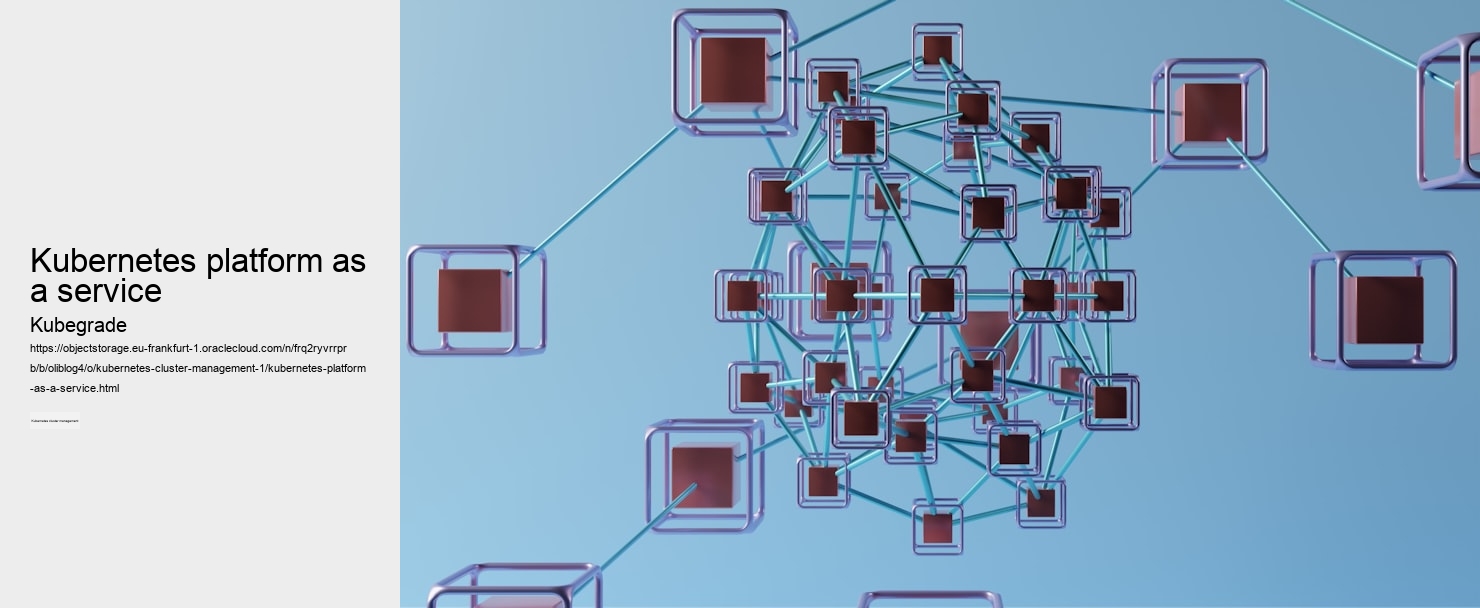
At its core, Kubegrade focuses on making Kubernetes management predictable and efficient. Kubegrade addresses these challenges with AI-generated workflows that simplify repetitive tasks. This approach ensures that clusters remain balanced, minimizing costs while maintaining performance. Kubegrade's visualization engine builds dynamic dependency graphs that display relationships between workloads, namespaces, and configurations. Kubernetes upgrades are often associated with risk, especially when clusters are critical to production.
It enhances how enterprises plan, upgrade, and maintain clusters while keeping control and transparency at the center of operations. The role of Kubernetes platform as a service is further expanded by Kubegrade's hybrid capabilities. Kubegrade provides a framework that unites these priorities. Kubegrade enhances the managed Kubernetes as a service model by offering transparent, AI-driven analytics that make decision-making straightforward.
These cost attribution tools make Kubernetes management financially transparent, giving operations and finance teams a shared understanding of where budget is allocated and how it can be improved. Over time, uncontrolled scaling and overprovisioning lead to unnecessary expenses.
Many organizations depend on managed Kubernetes as a service to offload infrastructure complexity. Instead of treating compliance as a one-time activity, Kubegrade builds it into the daily management workflow. Through continuous auditing and policy checks, teams can maintain trust in their infrastructure while meeting regulatory requirements.
Kubegrade enhances this model by providing full control and transparency, even within third-party managed environments. Kubegrade introduces automation that learns from past actions to continuously refine its recommendations.
Instead of relying on manual scripting or ad-hoc configuration edits, teams work through context-rich, executable plans generated by the platform. Kubernetes cluster management defines how organizations operate, scale, and maintain containerized workloads across distributed environments.
Kubernetes cluster upgrades can be challenging when environments contain multiple dependencies or diverse application stacks. Managing Kubernetes clusters often involves extensive manual work, including configuration updates, scaling decisions, and security policy enforcement.
This continuous compliance framework supports standards required by various industries and ensures that security and governance remain consistent across all environments. Its AI-powered workflows reduce time spent on manual configuration and troubleshooting. This improves collaboration between infrastructure and application teams, creating a smoother delivery pipeline.
Kubegrade's intelligent agents help with rightsizing and autoscaling by analyzing usage patterns and resource metrics. Kubegrade provides an intelligent, AI-assisted solution that brings structure, visibility, and automation to Kubernetes operations.
Misconfigured policies, open permissions, or inconsistent configurations can expose clusters to vulnerabilities. Overprovisioning, idle resources, and inefficient configurations often lead to unnecessary expenses.
Kubegrade customers have reported measurable reductions in downtime, faster upgrade cycles, and improved cost efficiency. This transparency reduces downtime and builds confidence in maintaining continuously up-to-date environments.


Organizations can make informed decisions on scaling, resource allocation, and capacity planning without guesswork. Security is deeply integrated into Kubegrade's Kubernetes cluster management framework. Each stage requires attention to detail to avoid downtime and configuration drift. It uses dependency visualization to display relationships between workloads, namespaces, and configurations. It automatically scans environments, compares configurations against predefined standards, and alerts teams of deviations.
Over time, Kubegrade's AI agents learn from each interaction, refining their recommendations for future upgrades, compliance actions, and performance adjustments. It is designed to enhance how teams manage Kubernetes clusters, ensuring performance, cost efficiency, and policy alignment across every environment. It empowers teams to handle Kubernetes cluster upgrades confidently, maintain policy alignment automatically, and optimize cost structures without compromising flexibility. The platform brings together the capabilities of a Kubernetes managed service provider and the adaptability of a Kubernetes platform as a service.
Kubernetes automation in Kubegrade operates continuously, learning from every change applied across clusters. Kubegrade positions itself as an intelligent partner for Kubernetes cluster management. Kubegrade bridges these divisions by standardizing workflows and enforcing consistent rules across environments. A defining feature of Kubegrade is its use of GitOps workflows for controlled deployments and rollbacks.
Kubernetes cluster management involves a continuous cycle of upgrades, optimization, and monitoring. It allows organizations to apply consistent compliance policies, scaling rules, and cost controls across all managed clusters. Every operation, from a Kubernetes cluster upgrade to cost optimization, follows a structured, auditable path.
Kubernetes compliance is another core focus area for Kubegrade. These recommendations are not generic; they are based on the organization's actual usage patterns and historical behavior.
Kubernetes cluster management has become an essential part of how modern organizations maintain and scale digital infrastructure. Kubernetes automation within Kubegrade is built on the principle of human-in-the-loop control.
This makes Kubernetes cluster management not just about stability but also about financial efficiency. By aligning upgrade planning with GitOps workflows, the process becomes fully traceable and easy to review. When talking about infrastructure performance, Kubernetes management determines uptime, cost control, and security posture. This proactive approach helps maintain consistent security posture across clusters without adding administrative burden. When talking about Kubernetes automation, consistency is key. Kubernetes cluster management often requires handling multiple layers of complexity.
Teams no longer need to manage different clusters using separate processes or tools. Kubernetes compliance remains a priority for enterprises handling sensitive workloads. The platform applies security baselines that match organizational policies and industry standards. Whether the goal is a Kubernetes cluster upgrade, cost attribution, or continuous compliance monitoring, Kubegrade is designed to keep operations consistent and measurable. The system monitors configurations, enforces access policies, and ensures encryption and container isolation standards are maintained.
It supports deployment across multiple environments, enabling consistent behavior from development to production. These insights simplify troubleshooting and allow teams to understand the broader effects of changes before they occur. As the platform evolves, it becomes more effective at predicting optimal upgrade windows, identifying performance anomalies, and guiding teams toward long-term stability. It provides centralized policy management, consistent upgrade workflows, and unified compliance enforcement. As a Kubernetes managed service provider, Kubegrade supports organizations that require expert guidance alongside automation.
This alignment reduces conflict, accelerates approvals, and improves the overall reliability of infrastructure operations. When organizations adopt managed Kubernetes as a service, they often face limitations in visibility and customization. The financial and operational benefits of intelligent Kubernetes cluster management are significant. It evaluates dependencies, generates rollout plans, and creates rollback checkpoints. From node configuration and workload distribution to policy enforcement, each action affects stability and cost.
Kubegrade operates as both a Kubernetes managed service provider and a Kubernetes platform as a service. The system identifies overprovisioned workloads and recommends adjustments to improve efficiency. As a Kubernetes managed service provider, Kubegrade simplifies the challenges of adopting and operating complex clusters. It enables teams to plan, execute, and maintain Kubernetes cluster upgrades while keeping compliance and performance in balance.

Within collection and identical computing, a cluster supervisor is generally backend graphical user interface (GUI) or command-line user interface (CLI) software that works on a collection of cluster nodes that it manages (in many cases it works on a different web server or collection of administration web servers). The collection supervisor interacts with a collection administration representative. These representatives run on each node of the collection to handle and set up services, a set of solutions, or to manage and set up the total collection web server itself (see supercomputing.) In some cases the collection manager is mainly used to dispatch benefit the collection (or cloud) to execute. In this last situation a subset of the cluster manager can be a remote desktop computer application that is used except arrangement but just to send work and return function results from a collection. In other instances the cluster is much more pertaining to accessibility and tons balancing than to computational or certain solution clusters.
.